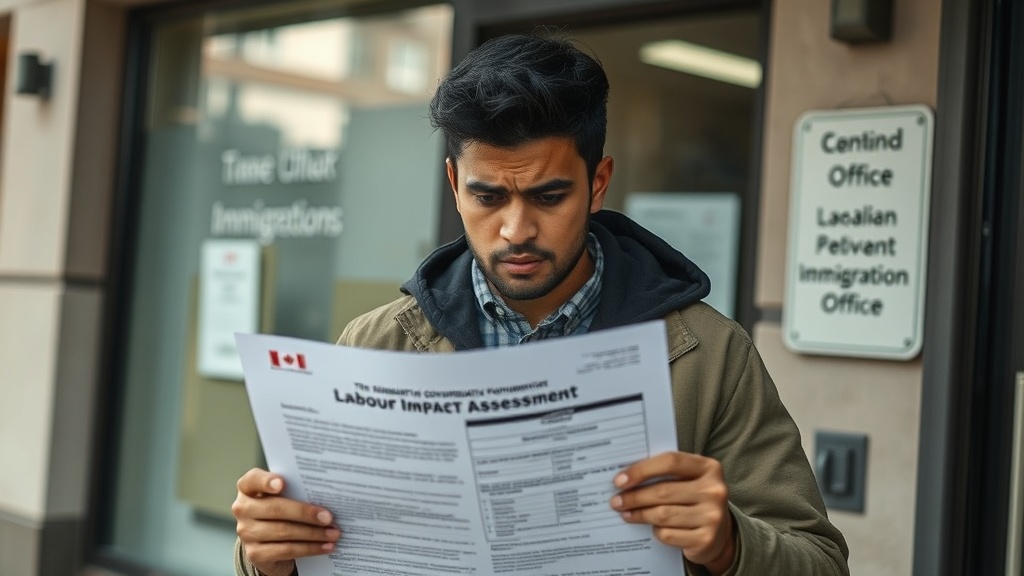
Understanding the Refusal to Process Labour Market Impact Assessment Applications: Key Conditions Explored
Direct Answer
Labour Market Impact Assessment (LMIA) applications may be refused processing in Canada due to specific regulatory and public policy conditions. Key reasons include employer ineligibility relating to compliance issues, caps on low-wage positions, and geographic considerations such as unemployment rates in specific regions.
Introduction to Labour Market Impact Assessment (LMIA)
A Labour Market Impact Assessment (LMIA) is a crucial document required for Canadian employers seeking to hire temporary foreign workers. This document assesses the impact of hiring a foreign worker on the Canadian labour market, ensuring that Canadian citizens and permanent residents have first access to available jobs. Understanding why certain LMIA applications might be refused processing is essential for employers and prospective employees.
Overview of Regulatory Authorities Affecting LMIA Processing
The regulatory framework governing LMIA applications is strict and multifaceted. Primary authorities like Immigration, Refugees and Citizenship Canada (IRCC) and Employment and Social Development Canada (ESDC) enforce conditions that, when unmet, can lead to a refusal to process. Some critical conditions are:
- Employers involved with the sex industry (e.g., striptease, erotic dance, escort services) do not have their applications processed.
- Employers on the IRCC ineligibility list due to non-compliance found during reviews or inspections.
Expert Commentary: "Compliance with immigration regulations is non-negotiable. Employers must ensure adherence to avoid being labeled ineligible, which directly impacts their ability to hire foreign talent." — Immigration Expert, Verixa
Public Policy Considerations and Ministerial Instructions Impacting Processing
Public policy considerations, guided by Ministerial instructions, are influential in LMIA application processing. These instructions may refuse applications for:
- Positions exceeding the cap on low-wage roles.
- Jobs in census metropolitan areas (CMA) with unemployment rates of 6% or higher.
- In-home caregiver roles with live-in requirements.

Detailed Analysis of Employer Ineligibility Criteria
Employers may be deemed ineligible if they:
- Consistently provide non-compliant services within the Temporary Foreign Worker Program.
- Are banned from the program following discovered non-compliance.
- Have unpaid administrative penalties on record.
Furthermore, applications from these employers are automatically flagged, preventing processing under regulatory authority.
Cap on Low-Wage Positions and Implications
Low-wage positions are subject to stringent caps to protect the domestic workforce. CMAs are specifically instructed via Ministerial directions to maintain certain thresholds:
- 10% Cap: General low-wage positions cannot exceed this percentage of the total workforce at a single location.
- 20% Cap: Sectors like construction, food manufacturing, and care facilities face this adjusted cap.